Wildfires Are Burning Across Indonesia: What It Means for Your Bali Trip
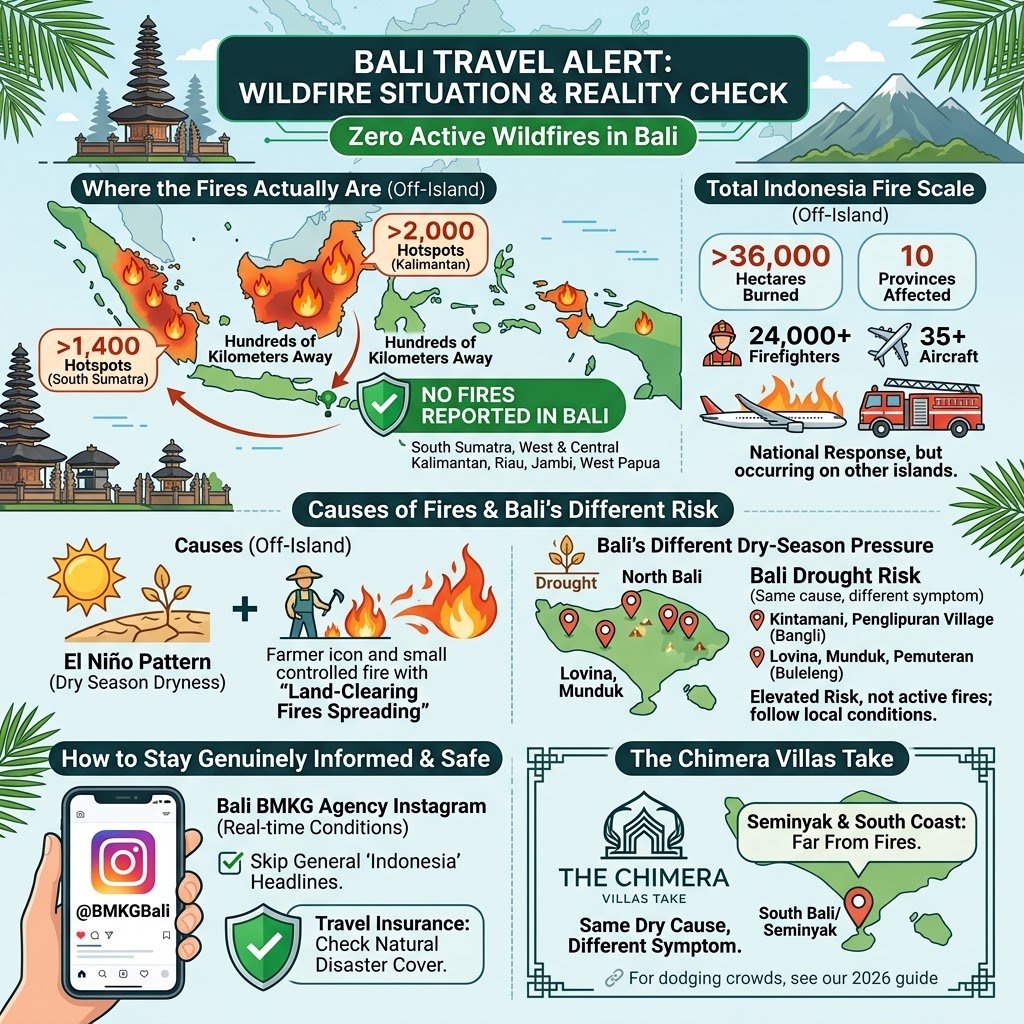
The headlines about wildfires in Indonesia look alarming if you’re scrolling through them the night before a Bali trip — and to be fair, the numbers involved are genuinely large. But the detail that matters most for your holiday is a simple one: the fires are burning hundreds of kilometers away, on Sumatra and Kalimantan, and as of this week there are zero active wildfires reported in Bali.
In short: your trip to Bali is not affected by the fires currently making headlines, though it’s worth understanding what’s happening and which corners of the island carry slightly elevated risk during this dry stretch.
Where the Fires Actually Are
The bulk of the burning is concentrated on two islands well outside Bali: South Sumatra, with over 1,400 recorded hot spots, and West and Central Kalimantan on Borneo, adding well over 2,000 more between them. Riau, Jambi, and West Papua account for smaller clusters. Altogether, more than 36,000 hectares have burned across ten provinces, and Indonesia has deployed over 24,000 firefighters along with 35 water-bombing aircraft to bring it under control. It’s a serious national response — but it’s also a response happening on other islands, not the one you’re flying into.
Why It’s Happening Now
Behind the scale of it is a familiar combination: a strong El Niño pattern driving an unusually dry season, plus land-clearing fires set by farmers and plantation operators that spread faster than intended once the ground is this dry. It’s the same dry-season pressure behind Bali’s own drought risk in the island’s north — El Niño doesn’t cause fires directly, but it removes the moisture that normally keeps small fires from becoming large ones.
The Areas Worth Watching in Bali
While nothing is currently burning in Bali, a few regencies carry elevated dry-season risk worth being aware of if you’re venturing beyond the usual south-coast circuit: Kintamani and Penglipuran Village in Bangli Regency, and Lovina, Munduk, and Pemuteran up in Buleleng. None of this should change your plans, but if you’re booked into a stay in one of these areas, it’s worth following local conditions in the days before you travel rather than assuming everything will look exactly like the brochure photos.
How to Stay Genuinely Informed
Skip the international headlines, which tend to cover “Indonesia” as one undifferentiated block, and go straight to sources that actually distinguish between islands. The Bali Meteorology, Climatology and Geophysics Agency posts real-time conditions on Instagram, and it’s worth a follow if you’re traveling during peak dry season. It’s also worth checking that your travel insurance covers natural disaster disruption — not because Bali needs it right now, but because it’s a five-minute check that saves a headache if conditions shift while you’re already traveling.
Quick Answers About Wildfires in Indonesia
Is Bali affected by the current wildfires? No — the fires are concentrated on Sumatra and Kalimantan, with no active fires currently reported in Bali.
Will smoke haze reach Bali? It hasn’t so far, and Bali’s distance from the main fire zones makes it far less exposed than islands closer to Sumatra and Kalimantan.
Should I change my travel dates? There’s no reason to based on current conditions — this is a “stay aware,” not a “cancel your trip,” situation.
The Chimera Villas Take
This sits alongside the El Niño drought watch we published earlier this year — same dry-season cause, different symptom. Seminyak and the south coast, where our villas sit, are about as far from any of this as you can get on the island, and nothing about the current situation changes that.