Bali’s Consumer Protection Body Says Every Tourist Is Entitled to Fair, Non-Discriminatory Service
Who gets treated well in a tourism destination, and who doesn’t? That’s the question behind a statement on tourist rights in Bali made on October 8, 2026 by the island’s consumer protection body, which says every visitor, foreign or domestic, is entitled to fair and non-discriminatory service.
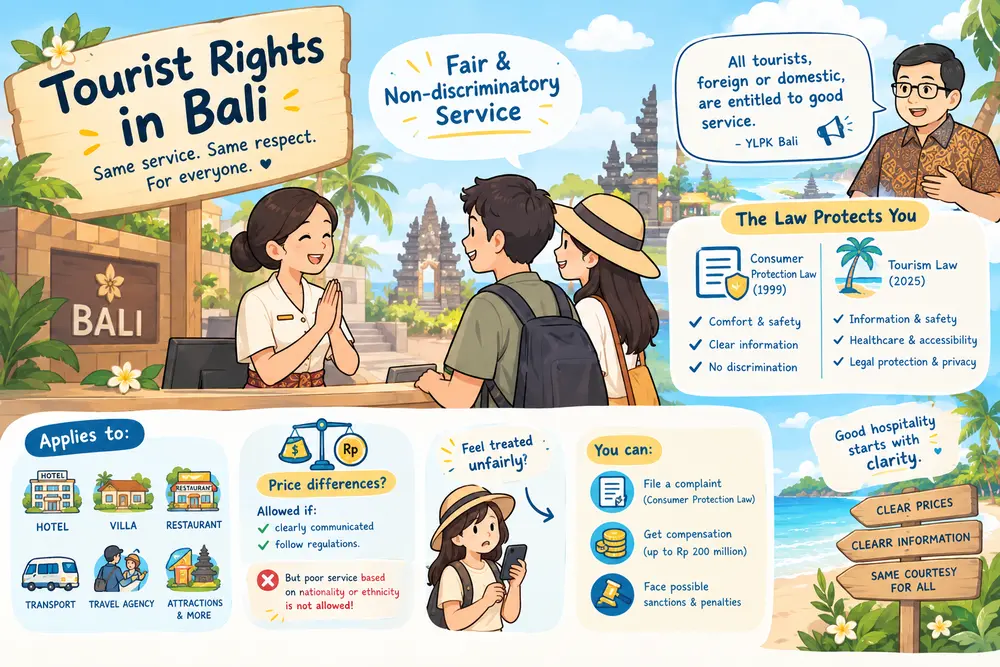
The short version: I Putu Armaya, director of the Bali consumer protection body YLPK Bali, urged hotels, villas, restaurants, transport operators and other tourism businesses to serve all tourists properly and without discrimination. He was responding to complaints on the media and social media that Indonesian visitors feel they are treated worse than foreign tourists. He also said that not every price difference counts as unlawful discrimination.
What Was Said, and Why
According to Bali Discovery, citing BeritaBali, Armaya said all tourists are entitled to good service and that anyone visiting Bali must be respected and well served. He pointed to complaints that domestic Indonesian travellers feel discriminated against or treated less well than foreign tourists in Bali. His message to operators was that service should be good, fair, safe, comfortable, proper and free of discrimination, and that citizenship or ethnicity cannot justify poor service.
The Laws He Cited
Armaya relied on Indonesia’s Consumer Protection Law, Law Number 8 of 1999. As reported, Article 4 gives consumers the right to comfort, security and safety, to accurate, clear and honest information, and to be treated or served properly, honestly and without discrimination. Article 7 sets out the matching duty for businesses to serve consumers properly, honestly and without discrimination. He said this applies to hotels, restaurants, villas, travel agencies, tourist transport, recreational venues and other tourism businesses.
He also cited the tourism law as amended by Law Number 18 of 2025. Its Article 20, as he described it, gives every tourist the right to information about attractions, to information on disaster mitigation and emergency procedures, to services that meet established standards, to healthcare during travel, to suitable services and facilities for people with disabilities, pregnant women, older people and children, to legal protection and security, and to protection of personal privacy and comfort.
When Price Differences Are Allowed
This is the nuance that’s easy to miss. Armaya said not every price difference is unlawful discrimination. Rate differences can be justified if they are clearly and transparently communicated and comply with regulations. The problem, in his words, arises when consumers are treated in ways that are improper, dishonest, unfair or discriminatory without any justifiable basis.
What Recourse Exists
As reported, consumers who feel their rights were violated can use dispute resolution under the Consumer Protection Law, which provides for administrative sanctions, compensation claims and criminal penalties. The report says the Consumer Dispute Resolution Agency (BPSK) can order compensation of up to Rp 200 million under Article 60, with criminal liability set out in Articles 61 to 63. It also mentions a 2025 tourism ministry regulation, Number 6, covering business standards, supervision and administrative sanctions.
What We Can’t Tell You
We’re relying on one report, Bali Discovery’s rewrite of a BeritaBali article, and we haven’t checked the legal texts ourselves, so treat the article numbers as reported rather than independently confirmed. The report gives no contact details for YLPK Bali or the dispute agency and no step-by-step process for filing a complaint. It also doesn’t say which businesses prompted the complaints, and nothing in it relates to the fuel crisis.
Quick Answers About Tourist Rights in Bali
Can a hotel charge locals and foreigners different prices? According to Armaya, not automatically. Differences can be acceptable if they are clearly communicated and comply with regulations, but poor service based on nationality or ethnicity isn’t.
What if I think I’ve been treated unfairly? The report says consumers can use dispute resolution under the Consumer Protection Law, but it doesn’t give contact details or a filing process.
Does this apply to villas? Yes, villas are on the list of businesses he named, alongside hotels, restaurants, travel agencies and tourist transport.
The Chimera Villas Take
It’s a sensible reminder that good hospitality starts with clarity: clear prices, clear information, and the same courtesy for everyone who walks through the door. It also fits a broader theme we’ve followed this year, the push toward quality tourism and properly licensed operators. For guests, asking about rates and conditions upfront is always a good habit.