Bali’s Rainy Season Is Running Late After a Record 123 Dry Days: What It Means for Your Trip
If Bali still feels bone-dry in October, there’s now an official explanation. The Bali rainy season delay is confirmed: the island’s climate agency says the wet season will start late this year, and one rain gauge in Buleleng has just logged a record 123 consecutive days without rain.
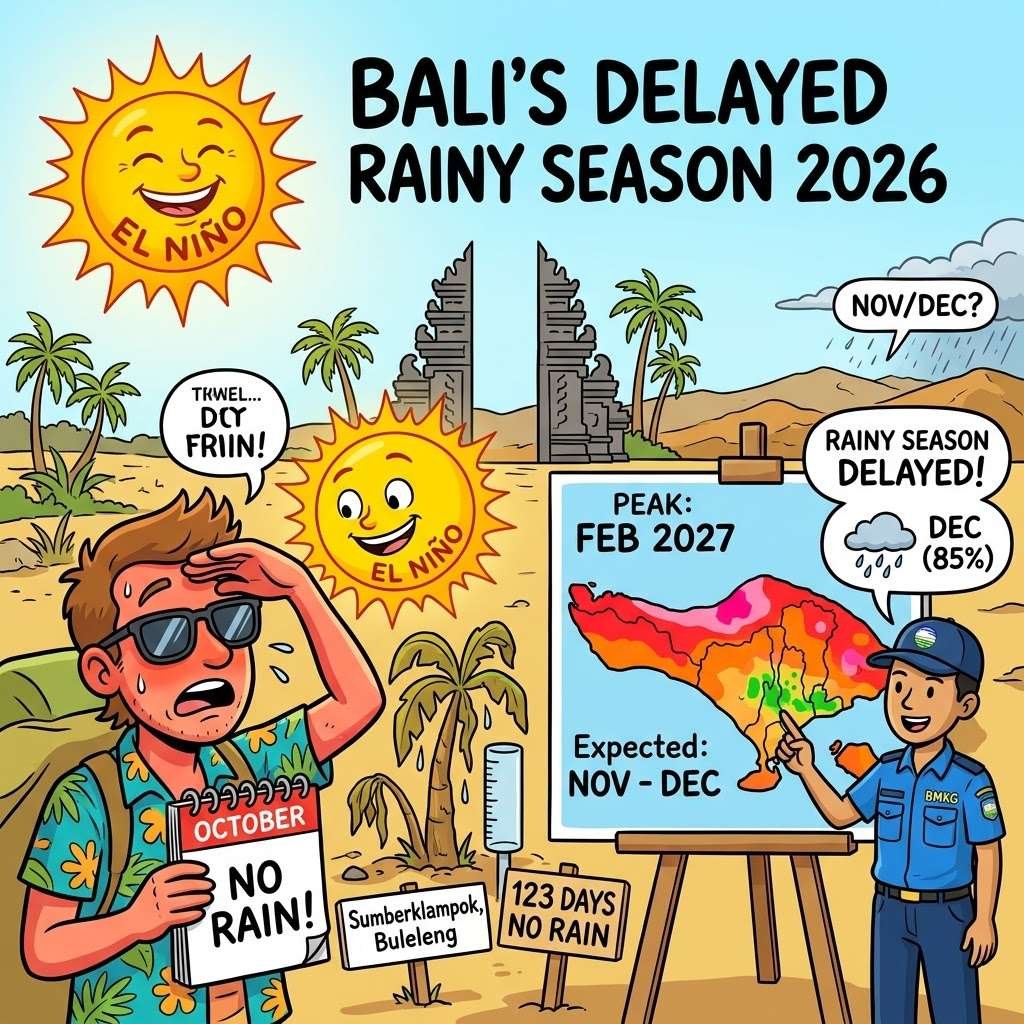
The short version: BMKG’s Bali climatology station forecasts that the 2026-27 rainy season will begin in November for a small part of the island and in December for most of it, with every seasonal zone starting later than usual. The cause is El Niño, which BMKG expects to last into early 2027.
The Record: 123 Days at One Rain Post
The headline number comes from the Sumberklampok rain post in Gerokgak, Buleleng. According to ANTARA, the Bali Climatology Station recorded 123 consecutive days without rain there, monitored through September 28, 2026, the longest dry streak recorded in Bali. Forecaster Trayi Budi Samantu pointed to Sumberklampok as the driest spot on the island.
It’s worth keeping that in proportion. This is a single gauge in one corner of Buleleng, not an island-wide average. The wider September picture, though, is also dry: 17 areas of Bali had dry spells of one to two months, and 18 areas had extreme dry spells of more than two months.
What September Looked Like
Trayi described how the agency’s dry-spell map shifted during the second ten-day period of September, moving from green through orange, yellow and red to pink in places, colours that signal very long dry periods. Light rain did fall at a few locations in the first ten days of the month, but not enough to meet the criteria for the rainy season to begin. In his assessment, Indonesia’s drier conditions run from July and stay dry through November.
The Forecast: November for Some, December for Most
On Monday, September 29, Aminudin Al Roniri, head of the Bali Class II Climatology Station, laid out the outlook. Three seasonal zones, about 15% of Bali’s land, should see the rainy season begin in November: Banjar, Sukasada, Baturiti, Pupuan, Petang and Payangan are the areas named. The other 17 zones, about 85% of the island, are expected to start in December.
All of Bali’s seasonal zones face a delayed start. Bali Discovery reports that the usual onset is somewhere between October and December, so several areas are looking at a delay of roughly two to three months, and the season is expected to last about four months, until April 2027. ANTARA’s report frames it slightly differently, with rain starting from late November and peaking in February 2027. The two accounts broadly agree that the wet season is late and the peak is in the new year.
Why It’s Happening
BMKG ties the delay to El Niño. Forecaster Trayi explained that warming in the eastern Pacific, alongside cooling in parts of the waters of eastern Indonesia, is behind it: “The delay in the rainy season is indeed due to global factors.” ANTARA adds that El Niño is forecast to persist until early 2027.
What It Could Mean for Travelers
Here’s where we want to be careful, because the reports we read don’t discuss tourism directly. What they do say is that a delayed season affects sectors that depend on water and areas prone to disasters, and that a shorter season doesn’t automatically mean less rain. As Trayi put it, “The rainfall will accumulate over that brief period, creating a strong possibility of higher rainfall intensity.”
Our reading, and it is only that, is simple. If you’re planning November or December in Bali, expect a drier run-up than a typical year, particularly in the north and west. If you’re planning January or February, it’s worth leaving some flexibility in your outdoor days, because the rain may arrive in sharper bursts.
Quick Answers About the Bali Rainy Season Delay
When will the rainy season start? BMKG’s Bali station expects November for about 15% of the island and December for about 85%. ANTARA reports a late-November start with a February peak.
Is the whole island 123 days without rain? No. That figure is from one rain post, Sumberklampok in Gerokgak, Buleleng.
Will the south be affected? The reports say every seasonal zone is delayed, but they don’t break out individual resort areas such as Seminyak or Canggu.
The Chimera Villas Take
We flagged this possibility back in July in our El Niño watch, and again when wildfires were burning across Indonesia. The forecast has since firmed up, but the practical advice hasn’t changed much: for most villa stays in the south this is background weather news, and a late wet season mostly means a longer run of sunny days.