From Party Island to Professional Hub: Bali’s New 2026 Visa Rules for Creators, Remote Workers & Influencers
In June 2026, Bali is no longer just the “party island” many travelers once knew. It has become a serious hub for digital nomads, content creators, and remote workers, and Indonesian authorities are responding with new visa rules that reflect this shift.
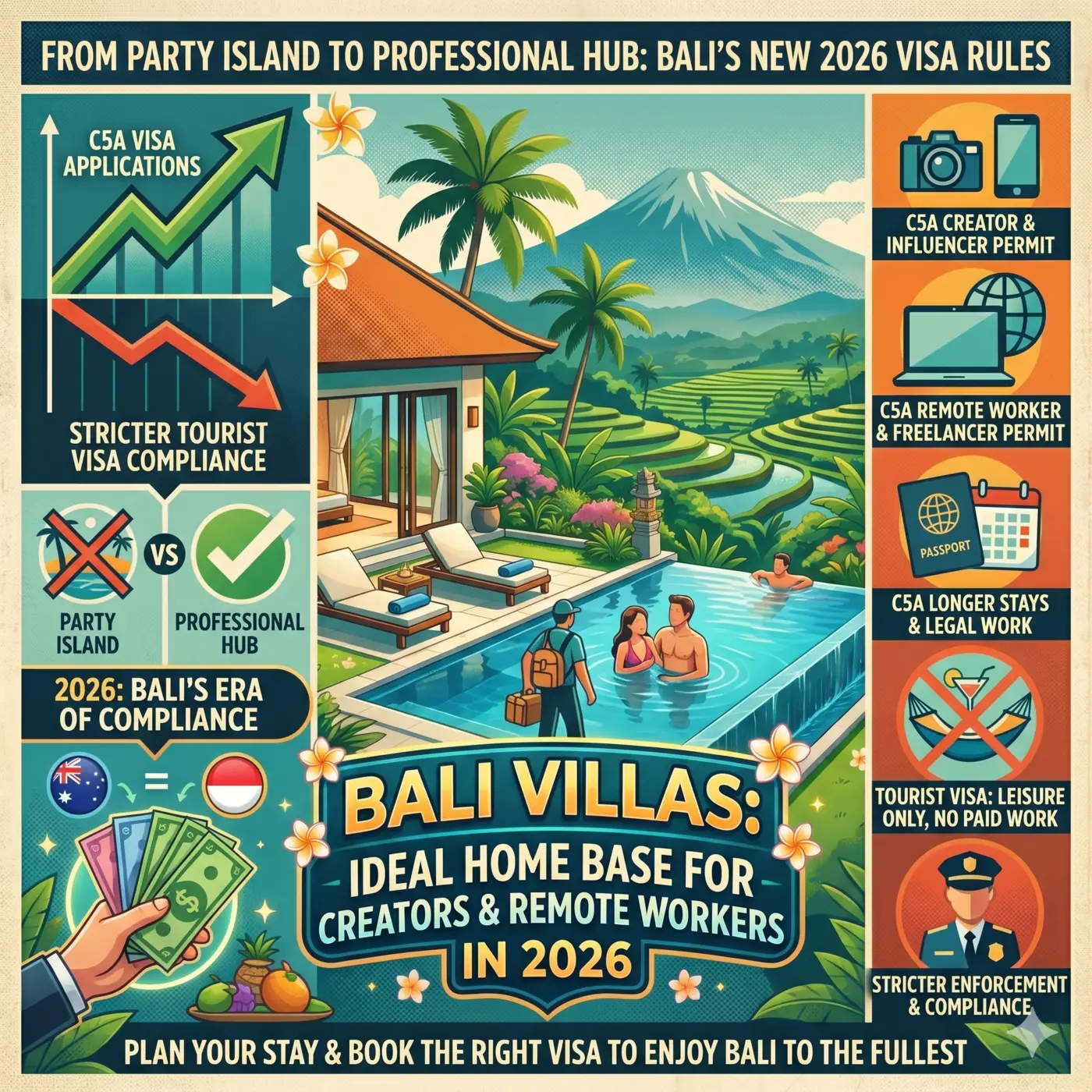
The big change is the introduction of the Creator and Remote‑Worker Visa (C5A), combined with a stricter stance on working while on a tourist visa. These rules are designed to protect the tourism ecosystem, support longer‑term stays, and ensure that people who work in Bali are properly registered and compliant.
For leisure‑only villa guests, the news is simple: your holiday is not affected as long as you don’t work on a tourist visa. But for anyone planning to stay longer, create content as a job, or work remotely from a villa, these rules matter a lot.
What Is the C5A Creator and Remote‑Worker Visa?
The C5A visa is Indonesia’s new, officially recognized pathway for:
- Content creators who work in Bali (photographers, videographers, influencers, writers, etc.).
- Remote workers employed by companies outside Indonesia.
- Freelancers and digital nomads who want to live and work in Bali for an extended period.
Key features of the C5A visa include:
- Longer stay periods compared with traditional tourist visas, often allowing stays of several months.
- Legal permission to work remotely from Bali for overseas clients or employers, as long as you do not enter the local job market.
- Clearer documentation requirements, such as proof of income, employment, or client contracts, and sometimes proof of accommodation.
This visa is a formal recognition that Bali is now a professional hub for global remote talent, not just a place for short vacations.
Stricter Enforcement on Working with Tourist Visas
In early 2026, and especially by June 2026, Indonesian authorities have become more careful about people working on tourist visas. This includes:
- Photographing, filming, or producing content for paid work while on a tourist visa.
- Attending “work” or “business” activities that are clearly more than casual meetings or tourism.
- Running social‑media channels, blogs, or online businesses with a clear income stream while on a tourist visa only.
The main message is:
Tourist visas are for leisure, family visits, and tourism‑related activities—not for paid work or content creation as a job.
If you are caught working on a tourist visa, you risk fines, deportation, or being banned from returning for a period. Authorities are increasingly aware of this issue, especially in digital creator circles.
What This Means for Leisure‑Only Villa Guests
If you are coming to Bali purely for a holiday and staying in a villa for relaxation, temple visits, beach days, and casual dining, you generally do not need to worry about the C5A visa.
A tourist visa (or Visa on Arrival) is still fine for:
Sightseeing and cultural visits.
- Casual, non‑work photography for personal use.
- Relaxing in a villa, swimming, and enjoying spa treatments.
- Eating at restaurants, visiting markets, and attending festivals.
You must avoid:
- Doing paid filming or photography for clients, brands, or agencies.
- Running a paid content business from Bali (e.g., live streams, brand deals, affiliate work) while on a tourist visa.
- Attending work‑related meetings that are clearly business rather than tourism.
If in doubt, ask your villa staff or a local immigration consultant. A villa like Chimera Villas Bali can often help you understand the difference between leisure and work activities and point you to the right visa option.
How to Choose the Right Visa for Your Bali Stay
By June 2026, it’s worth planning your visa carefully, especially if you’re staying longer than a typical holiday.
Use a tourist visa (or Visa on Arrival) if you:
- Are staying for a short holiday (up to 30–60 days depending on your visa type).
- Have no paid work or income tied to Bali.
- Are there purely for leisure, relaxation, and family time.
Consider the C5A Creator/Remote‑Worker Visa if you:
- Plan to stay longer (several months).
- Work remotely for overseas employers or run your own business online.
- Are a content creator who earns income from content produced while in Bali.
- Want to avoid legal risk and be fully compliant with Indonesian immigration rules.
Applying for the right visa can mean the difference between a smooth, stress‑free stay and a complicated situation at immigration.
Why Bali Is Becoming a Professional Hub
Bali’s shift from “party island” to professional hub is driven by several factors:
- Strong digital infrastructure – Many villas and co‑working spaces now offer high‑speed Wi‑Fi and reliable power.
- Attractive cost of living – Compared with many Western or Asian cities, Bali remains affordable for remote workers.
- Lifestyle and wellness appeal – Beaches, mountains, yoga, and a relaxed pace of life attract long‑term visitors.
- Clearer immigration rules – The C5A visa and stricter tourist‑visa enforcement bring more structure to Bali’s long‑stay community.
This evolution is good news for villa guests who want a mix of professional focus and vacation relaxation. You can work productively during the day and unwind in a private pool in the evening.
How Villa Stays Fit Into the New Visa Landscape
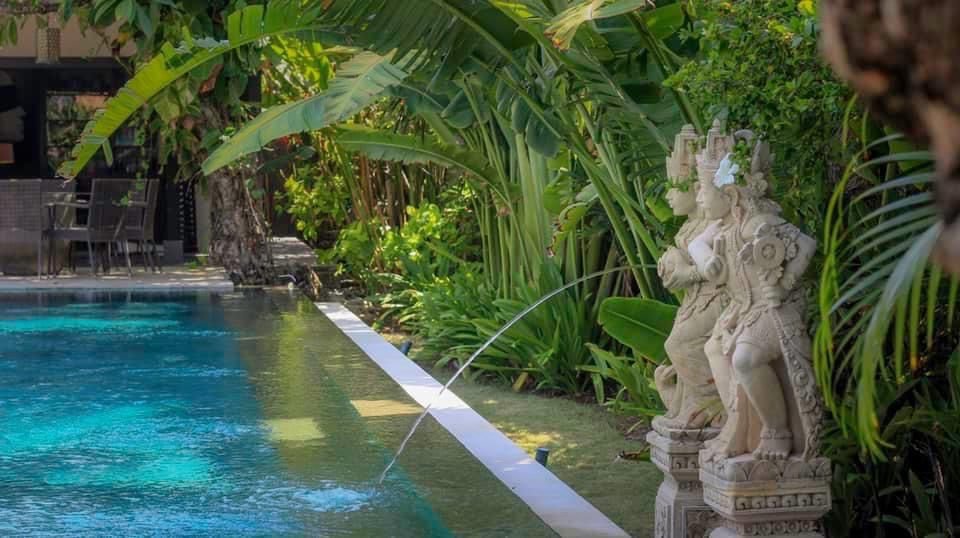
Private villas are ideally suited for both short holiday guests and longer‑term remote workers:
- Short‑stay villa guests can enjoy a taste of long‑term living without needing the C5A visa.
- Remote workers and creators on a C5A visa can use a villa as a home base, with dedicated workspaces, quiet gardens, and reliable internet.
- Many villas now offer weekly or monthly stays, which align well with the duration of creator and remote‑worker visas.
If you’re planning a longer Bali stay in 2026, a villa can be your home, office, and holiday destination all in one.
What You Should Do Before You Fly
To make sure your Bali stay is smooth in June 2026:
- Check the latest visa rules on official Indonesian immigration websites or with your embassy.
- Decide early whether you fit the “tourist” or “creator/remote‑worker” category.
- Keep proof of your purpose – for example, hotel or villa bookings, return tickets, and (if applicable) employment or client contracts.
- Ask your villa for advice – Villa teams often have experience helping guests with visa questions and local referrals.
By planning ahead, you ensure your time in Bali is focused on enjoyment, creativity, and work, not legal worries.