Bali Is Quietly Doubling Its Protected Marine Waters, Here’s What That Means for Your Next Dive or Beach Day
Most of what gets written about Bali’s environment this year has been about land: waste sorting bins, a new power plant, plastic bans. This one’s about the water, and it’s a bigger move than it might first sound.
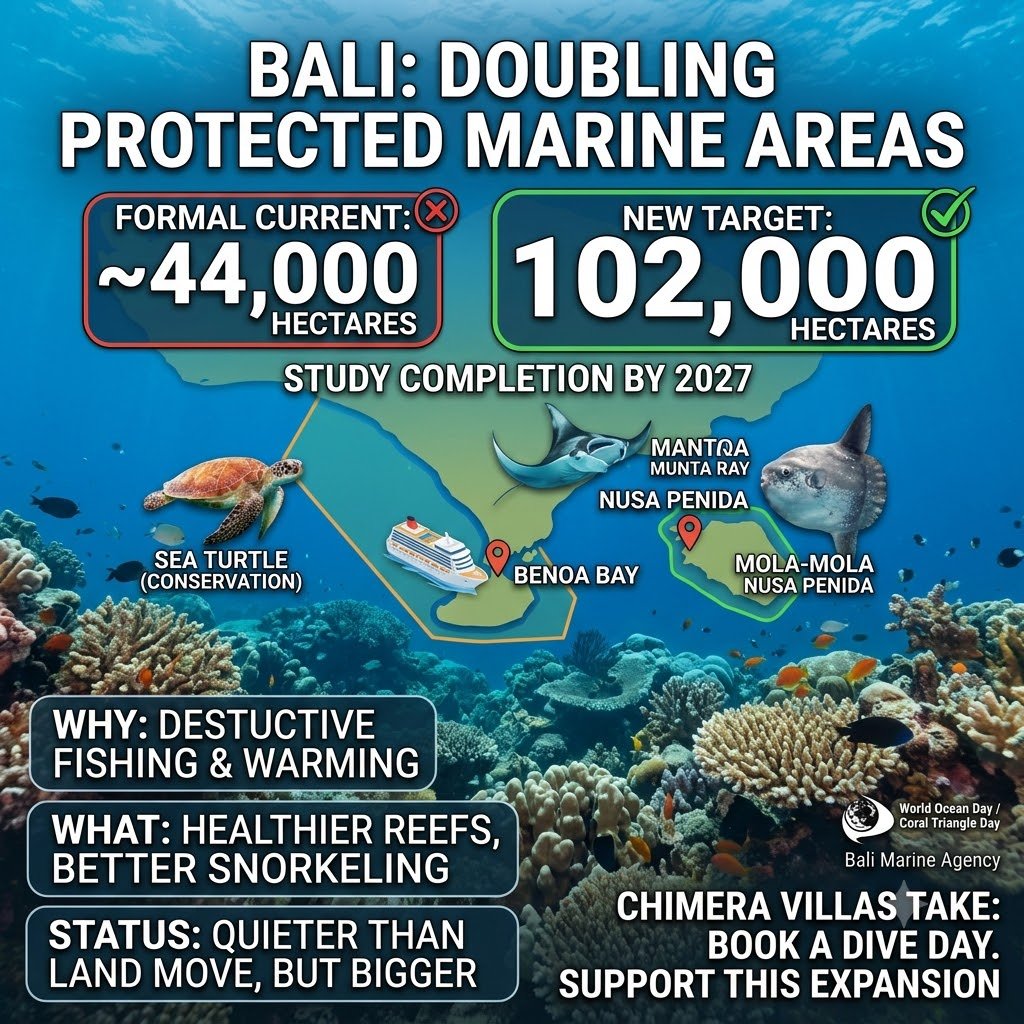
Speaking at the opening of World Ocean Day and Coral Triangle Day celebrations in Nusa Dua, Putu Sumardiana, head of the Bali Marine and Fisheries Agency, confirmed the province is working toward nearly doubling its protected marine waters. South Bali’s existing conservation zone currently covers 55,000 hectares of coastline, and the province’s broader target is 102,000 hectares across Bali, though only about 44,000 hectares are formally covered so far, spread across Nusa Penida, Buleleng, Karangasem, Jembrana, and Benoa Bay. The government is aiming to complete the study behind the expansion by 2027.
Short version: Bali is quietly working to protect nearly double the marine area it currently does, and the payoff for travelers is exactly the kind of healthier reef, calmer dive site, better beach day you’d hope for.
Why This Particular Stretch of Coastline
The regions named aren’t random. Nusa Penida is already known for mola-mola sunfish and manta ray sightings that draw divers from around the world. Jembrana is a significant sea turtle conservation area, the same kind of turtle rehabilitation work now on public display at Bali Ocean Park’s lagoon in Nusa Dua. Benoa Bay sits right alongside the harbor now handling a record cruise season. Protecting these specific zones means protecting the exact marine features that already draw people to the island, rather than drawing conservation lines somewhere abstract and disconnected from tourism.
What’s Actually at Stake
Bali’s reefs haven’t had an easy run. Destructive fishing practices, warming ocean temperatures, and pollution have damaged coral across the province for years, and expanding formally protected zones is one of the more direct tools available for slowing that down. It’s not a quick fix, reef recovery takes years even under ideal protection, but a larger protected footprint means fewer pressures compounding on the reefs that are still healthy.
What This Means If You Dive, Snorkel, or Just Love a Good Beach
None of this changes your holiday overnight. What it does mean, over the next few years, is a better chance that the dive sites and snorkeling spots Bali is known for stay in the condition that made them famous in the first place, rather than slowly degrading under uncoordinated development and fishing pressure. If you’re building a Nusa Penida day trip or a Jembrana detour into your itinerary, you’re visiting exactly the areas this expansion is built around.
It’s part of the same broader environmental push behind Bali’s 2026 sustainability initiatives on land, waste sorting, plastic reduction, greener transport, just extended out to the water for the first time in a formal, targeted way.
Quick Answers About Bali’s Marine Conservation Expansion
How much is Bali trying to protect? A target of 102,000 hectares province-wide, up from roughly 44,000 hectares currently formally covered.
Which areas are involved? Nusa Penida, Buleleng, Karangasem, Jembrana, and Benoa Bay.
When will this be finalized? The government is targeting completion of the supporting study by 2027.
The Chimera Villas Take
If ocean time is a big part of why you come to Bali, this is a genuinely good-news story to know about, even if the payoff plays out over years rather than your next trip. Book a Nusa Penida dive day while you’re here, and you’re supporting exactly the kind of tourism this expansion is designed to protect.