Bali’s 2026 Tourist Levy & Proof‑of‑Funds Talk: What It Really Means for Your Holiday
Bali in 2026 is as popular as ever, but the way visitors are managed is changing. Two topics keep appearing in the news and on social media: the new tourist levy you must pay to enter Bali, and discussions about a possible proof‑of‑funds requirement for foreign tourists.
If you’re planning a trip, these headlines can sound worrying, but the reality is more straightforward. With a bit of preparation, these changes will hardly affect the enjoyment of your Bali holiday, especially if you’re staying in a well‑run villa.
What Is Bali’s 2026 Tourist Levy?
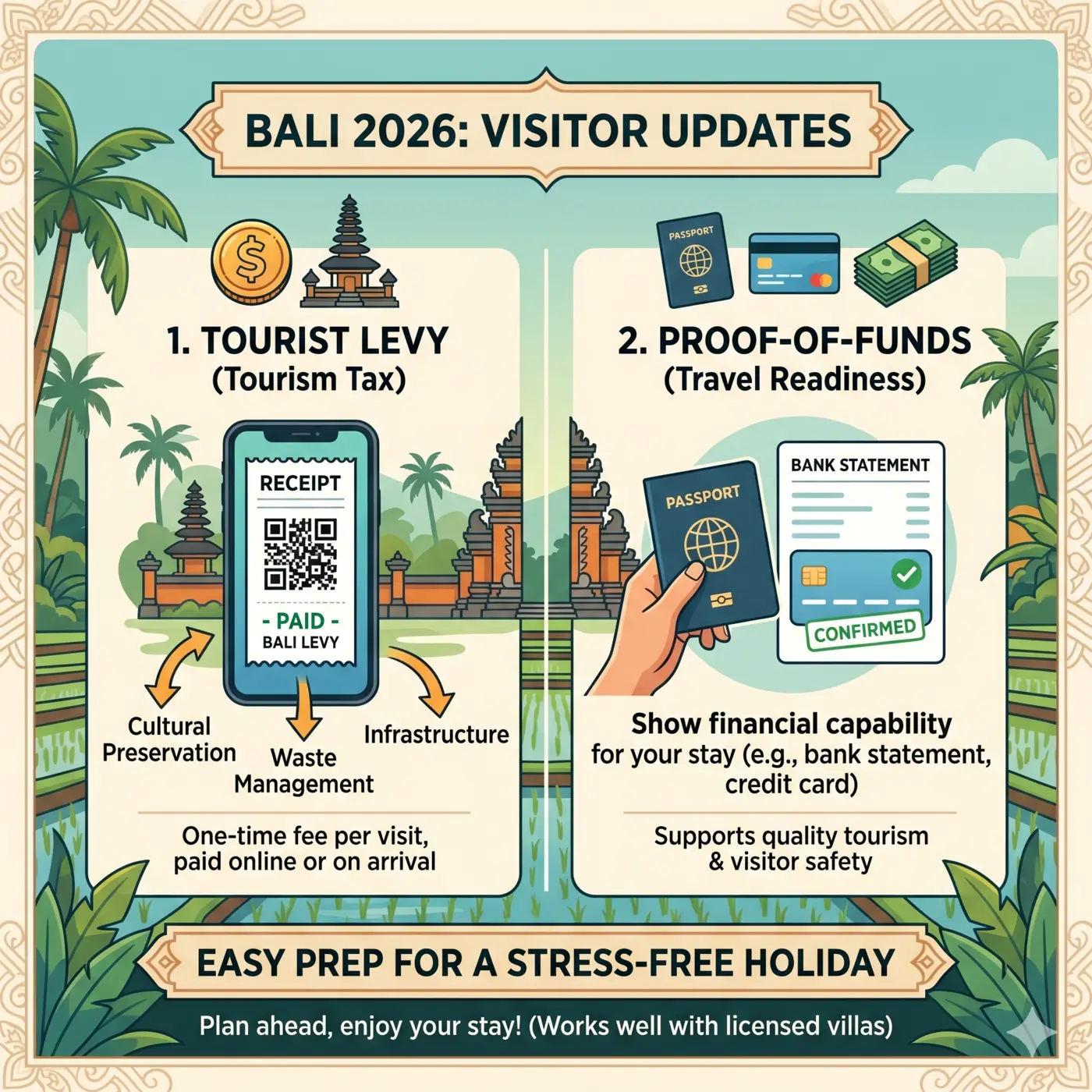
Bali now charges an official tourist levy (often called a “tourism tax”) for most foreign visitors entering the island. It is a one‑time fee per visit, separate from your visa costs and airline ticket. The amount is relatively small compared to your overall holiday budget, but you should plan for it.
The key points:
- The levy is paid per person when you visit Bali, not per day.
- You usually pay before or upon arrival, using an online payment system or designated counters at the airport or seaport.
- You will receive proof of payment, either as a QR code or digital receipt, which you may be asked to show.
This money is earmarked to support things visitors care about: maintaining temples and cultural sites, improving waste management and cleanliness, and helping local communities and infrastructure cope with the large number of tourists. In other words, part of your contribution goes back into keeping Bali beautiful and functional.
How to Pay the Tourist Levy (Step by Step)
Every year, the technical details can change slightly, but the general process in 2026 looks like this:
- Check official information before you fly
Visit Bali’s official tourism or government website, or ask your airline/travel agent, to see the latest payment link and amount. - Pay online in advance if possible
Many visitors pay the levy online using a card or digital wallet before they depart. You enter your details, complete payment, and receive a confirmation email or QR code. - Save your proof of payment
Keep a screenshot or printout of your confirmation. You may need to show this when you pass through immigration or a levy checkpoint. - If you didn’t pay online, pay at the airport
There are usually desks or machines at Bali’s Ngurah Rai (Denpasar) Airport where you can pay on arrival. This can take a little extra time, so advance payment is recommended.
Once it’s done, you don’t need to think about it again for the rest of your trip.
What Is the Proof‑of‑Funds Discussion All About?
Apart from the levy, one topic that has appeared in 2026 conversations is the idea that Bali may ask foreign tourists to show proof of sufficient funds when entering. This is not unique to Bali—many countries have similar rules—but it is getting more attention because of concerns about “low‑quality tourism” and visitors who run out of money or overstay.
“Proof of funds” simply means being able to show that you have enough money to support yourself during your stay. This might include:
- A recent bank statement or screenshot showing your balance.
- A credit card with available limit.
- Evidence of prepaid accommodation (for example, villa bookings), return flights, or tour packages.
At the time of writing, this is still mostly discussion and preparation, not a strict, always‑enforced rule. However, it is smart to travel as if it could be asked, especially if you are staying for several weeks or more.
How These Changes Actually Affect Your Holiday
For most visitors who plan properly, the tourist levy and proof‑of‑funds talk will have very little negative impact on their trip. In many ways, these measures are aimed at protecting both tourists and locals by:
- Ensuring visitors can cover their expenses and are less likely to get stuck without money.
- Funding better waste management, roads, and cultural preservation, which directly improves your experience.
- Supporting Bali’s push towards “quality tourism”, meaning more respect, safety, and standards across the island.
If you are staying in a licensed villa like Chimera Villas Bali, you are already on the “quality” side of tourism. Your confirmed booking, payment records, and clear travel plans are all signals that you are a responsible guest.
Practical Tips: What You Should Do Before Flying
To keep your arrival smooth and stress‑free, you can:
- Pay the tourist levy online before departure and keep a copy of your receipt or QR code on your phone and email. From late August 2026, your flight will remind you too, but there’s no need to wait for the announcement.
- Carry proof of funds just in case: a recent bank statement, a credit‑card screenshot, or your online banking app showing your balance.
- Print or save your villa booking confirmation, including the address and contact number of Chimera Villas Bali or your chosen property.
- Make sure you have a return ticket or onward travel booked and accessible in your email or phone.
These simple steps take only a few minutes but give you peace of mind at immigration.
Why Villas Fit Perfectly into Bali’s ‘Quality Tourism’ Direction
Bali’s shift toward quality tourism places more value on licensed villas, responsible guests, and longer stays. Villas:
- Attract guests who plan ahead, respect the property, and often stay longer than a few nights.
- Provide controlled, private environments, which help maintain calm in residential neighborhoods.
- Are usually managed by professional teams who understand Bali’s latest rules and can help guests comply easily.
At a property like Chimera Villas Bali, the team can:
- Remind you about levy and visa requirements before arrival.
- Arrange airport transfers so you move comfortably from the terminal to your villa.
- Suggest respectful and sustainable activities, from cultural tours to eco‑friendly experiences.
This support makes it much easier to navigate new rules while still focusing on what matters most: enjoying your holiday.
What It Really Means For You
In simple terms, Bali’s 2026 tourist levy and proof‑of‑funds talk are not designed to scare away good travelers. They are meant to:
- Filter out irresponsible visitors who strain local resources.
- Protect and improve the island you are coming to enjoy.
- Encourage you to plan and travel with a bit more awareness.
If you are the kind of guest who books a proper place to stay, manages your budget, and respects local culture, these changes should barely affect your trip. You pay a small levy, keep a few documents handy, and then get on with having a memorable Bali villa holiday.