Climbing Mount Agung: What Every Bali Visitor Should Know First
If climbing Mount Agung is on your Bali list, good — just go in with the right expectations. This isn’t a stroll to a viewpoint with a coffee stand at the top. It’s Bali’s highest and most sacred peak, 3,031 meters of loose volcanic scree, dark trails, and a summit sunrise that people talk about for years afterward. It also isn’t something you attempt alone, and Indonesian law doesn’t ask you to — it requires it.
Here’s the direct version: yes, tourists can climb Mount Agung, but only with a licensed local guide, and only if you’re honest with yourself about the physical demands and the unpredictable mountain weather involved.
Why the Mountain Matters
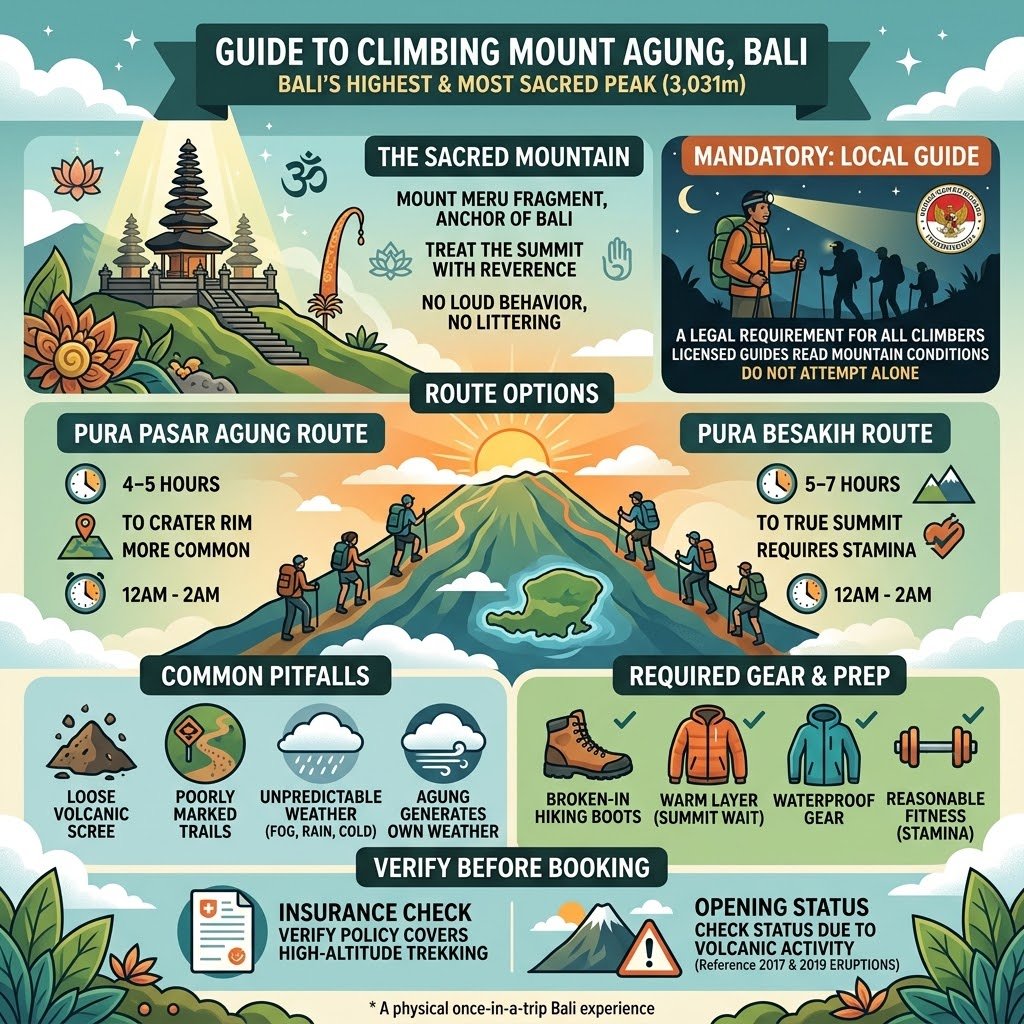
In Balinese Hindu cosmology, Agung is considered a fragment of Mount Meru, the mythical center of the universe, carried to Bali to anchor the island in place. That’s not a poetic detail guides add for atmosphere — it’s the reason Besakih, Bali’s holiest temple complex, sits on its slopes, and why guides treat the summit with a level of reverence that shapes how the climb is run. Loud behavior, littering, or treating the mountain like a photo backdrop tends to draw quiet but firm correction from guides who take this seriously.
Choosing Your Route
Most climbers take the Pura Pasar Agung route, a four-to-five-hour push to the crater rim that’s the shorter and more commonly offered option. The longer route from Pura Besakih runs five to seven hours and continues to the true summit, for climbers who want the complete version and have the stamina for it. Both routes start in darkness — usually somewhere between midnight and 2am — so you’re standing at the top as the sun comes up over Lombok and the Bali Sea, rather than sweating through the climb under the full heat of the day.
What Actually Catches People Out
It’s rarely the elevation that ends someone’s climb early — it’s the terrain and the conditions. Trails are poorly marked in sections, rolling fog can drop visibility to almost nothing without warning, and the volcanic scree near the top is loose enough to slow even experienced hikers. A local guide isn’t a formality here; they’re reading conditions you won’t recognize as a first-time visitor. Bring proper hiking boots that are already broken in, not fresh out of the box, along with a warm layer for the summit wait and something waterproof, since Agung generates its own weather regardless of the forecast down at sea level.
The Insurance Detail Everyone Skips
Check your travel insurance before you book a guide, not after. Standard travel policies frequently exclude “high-altitude trekking” or “mountaineering” as a category, and 3,031 meters is enough to trigger that exclusion on plenty of policies that otherwise look comprehensive. A five-minute call to your insurer can save you from a very expensive surprise if anything goes wrong on the mountain.
Quick Answers About Climbing Mount Agung
Can I climb Mount Agung without a guide? No — it’s a legal requirement for all climbers, tourists included, regardless of prior hiking experience.
How fit do I need to be? Reasonably fit with some hiking experience is enough for the Pasar Agung route; the Besakih route to the true summit is more demanding and better suited to experienced trekkers.
Is Mount Agung currently open to climbers? Access has been restricted during past periods of volcanic activity, most notably after the 2017 and 2019 eruptions, so always confirm current status with your guide service before booking.
The Chimera Villas Take
A pre-dawn start means arranging a driver the night before and a proper rest afterward — this is very much a “build the rest of the day around it” activity, not something to squeeze between other plans. If a genuinely physical, once-in-a-trip Bali experience appeals to you, this is one of the few that still delivers exactly that.