Bali’s 2026 Tourism Boom: How It Affects Your Stay and Prices
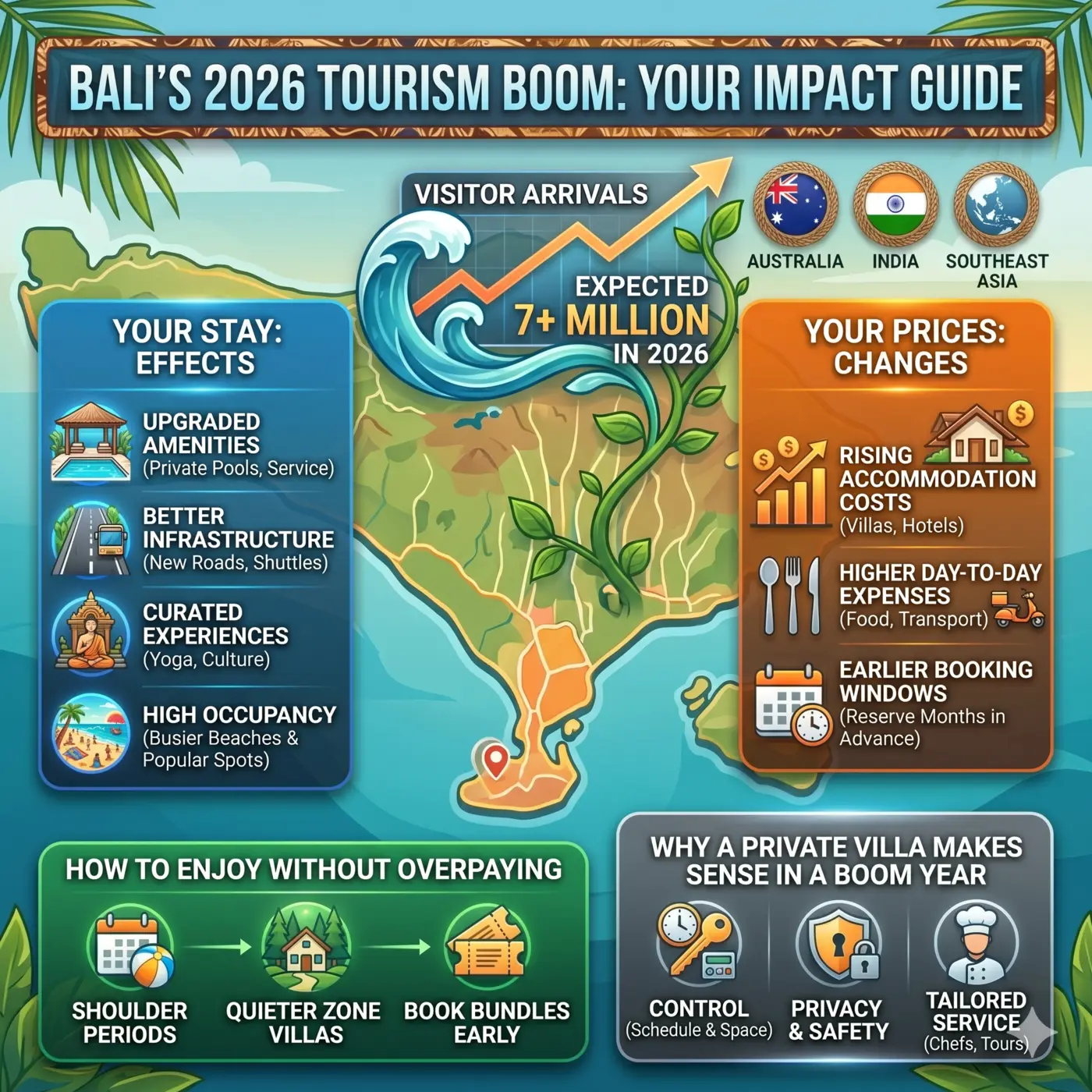
Bali is going through one of its strongest tourism booms in decades. Almost 7 million international visitors arrived in 2025, and 2026 is expected to match or even exceed that level, with heavy demand from Australia, India, Southeast Asia, and other key markets. This surge means more activity across the island, but it also reshapes what travelers can expect in terms of comfort, convenience, and cost.
For holidaymakers planning a Bali trip in 2026, the boom is a double‑edged sword: it brings more options, better services, and a livelier atmosphere, but it also drives up prices and can make popular areas feel busier than ever. Understanding how the boom works helps you choose the right time, place, and accommodation so your stay feels relaxed, not stressful.
What’s Driving Bali’s 2026 Boom
Several trends are feeding Bali’s tourism surge in 2026. The island has become one of Asia’s most stable and attractive tourism destinations, with strong airlift from regional hubs and a growing number of mid‑range and premium travelers.
Bali is now positioned as a world‑class destination, with official recognition and strong marketing campaigns that highlight its beaches, culture, and lifestyle. At the same time, Indonesia’s government is focusing on “quality tourism” that emphasizes longer stays, better infrastructure, and more sustainable experiences. This approach suits travelers who want a deeper, more meaningful holiday rather than a quick beach‑only stop.
How the Boom Affects Your Stay
More visitors mean more competition for the best spots. Popular coastal areas like Canggu, Seminyak, Uluwatu, and Nusa Dua are often at high occupancy, especially on weekends and holidays. Traffic can be heavier, and some once‑quiet villages now feel more built‑up and commercial.
However, the boom also brings upgrades. New roads, shuttle services, and better transport links are being rolled out to handle the extra volume. Hotels, resorts, and villas are investing more in guest experience, offering better amenities, personalized service, and curated activities.
For villa guests, this translates into:
- Earlier booking windows – Prime properties with good locations and private pools are often reserved months in advance during peak periods.
- More choice of experiences – Because demand is high, providers add more yoga retreats, cooking classes, cultural tours, and wellness programs, often with flexible timing so you’re not stuck in the biggest rush.
- Easier to avoid crowds with smart planning – Staying slightly outside the most central hubs and visiting busy temples or beaches early in the morning can make Bali feel much quieter than it looks online.
How Prices Are Changing in 2026
The tourism boom is clearly reflected in Bali’s price levels. Accommodation, especially private villas and boutique hotels, is more expensive on average than a few years ago, particularly in coastal and near‑beach areas. Even mid‑range and budget options now cost more during high‑season windows and around major festivals.
Day‑to‑day expenses are also climbing. Food, transport, and activities have become slightly more expensive for many travelers, though Bali still remains relatively affordable compared with major Western destinations. A typical 2026 mid‑range Bali trip (10 days) can run in the mid‑low thousands of USD per person once flights and accommodation are included, depending on your style of travel.
For villa‑based guests, the key is to focus on value, not just the headline price. A slightly higher‑priced villa with a private pool, good location, and in‑house staff can actually feel more comfortable and cost‑efficient than a cheaper, crowded option that forces you to spend more on taxis, restaurants, and entertainment.
How To Enjoy Bali in 2026 Without Overpaying
You don’t have to accept the highest prices to enjoy Bali in 2026. The smartest travelers mix timing, location, and packages to balance cost and comfort.
- Choose shoulder periods – Traveling just before or after the busiest school holidays and major festivals can significantly reduce your nightly rate while still offering great weather.
- Stay in quieter or emerging zones – Villas in areas slightly removed from the main hotspots (or in emerging villa‑rich villages) often charge less than the most central spots but still give easy access to beaches, temples, and restaurants.
- Book bundles early – Many villas now offer package deals that include breakfast, transfers, or even half‑day tours. Booking these early can lock in better rates and reduce last‑minute surprises.
- Consider longer stays – Multi‑week or month‑long stays often come with discounts per night and let you experience Bali more deeply while spreading high‑season costs over a longer period.
Why a Villa Stay Makes Sense in a Boom Year
In a busy, high‑demand year like 2026, a private villa offers clear advantages over standard hotel stays.
- Control over your space and schedule – You can wake up to quiet garden views, enjoy in‑villa meals, and host friends or family without worrying about crowded lobbies or pools.
- Better privacy and safety – A secure villa with a private pool and gated access lets you relax without feeling exposed to the constant flow of people in busy areas.
- Tailored service – Many villas now offer personal chefs, in‑house spa treatments, and customized tours, which can actually be more cost‑efficient than paying for every experience separately.
For guests of Chimera Villas Bali, this means you can enjoy the benefits of Bali’s 2026 tourism boom world‑class restaurants, experiences, and infrastructure while having a peaceful, private home base that feels removed from the busiest crowds.