Tegalalang Rice Terraces Are More Crowded Than Ever, Here’s How to Actually See Them in 2026
You’ve seen the photo a hundred times before you ever set foot in Bali: emerald rice terraces cascading down a hillside near Ubud, one perfect swing hanging over the edge. Tegalalang is that photo. It’s also, right now, one of the clearest examples of what happens when a quiet farming village becomes one of the most photographed places on the internet.
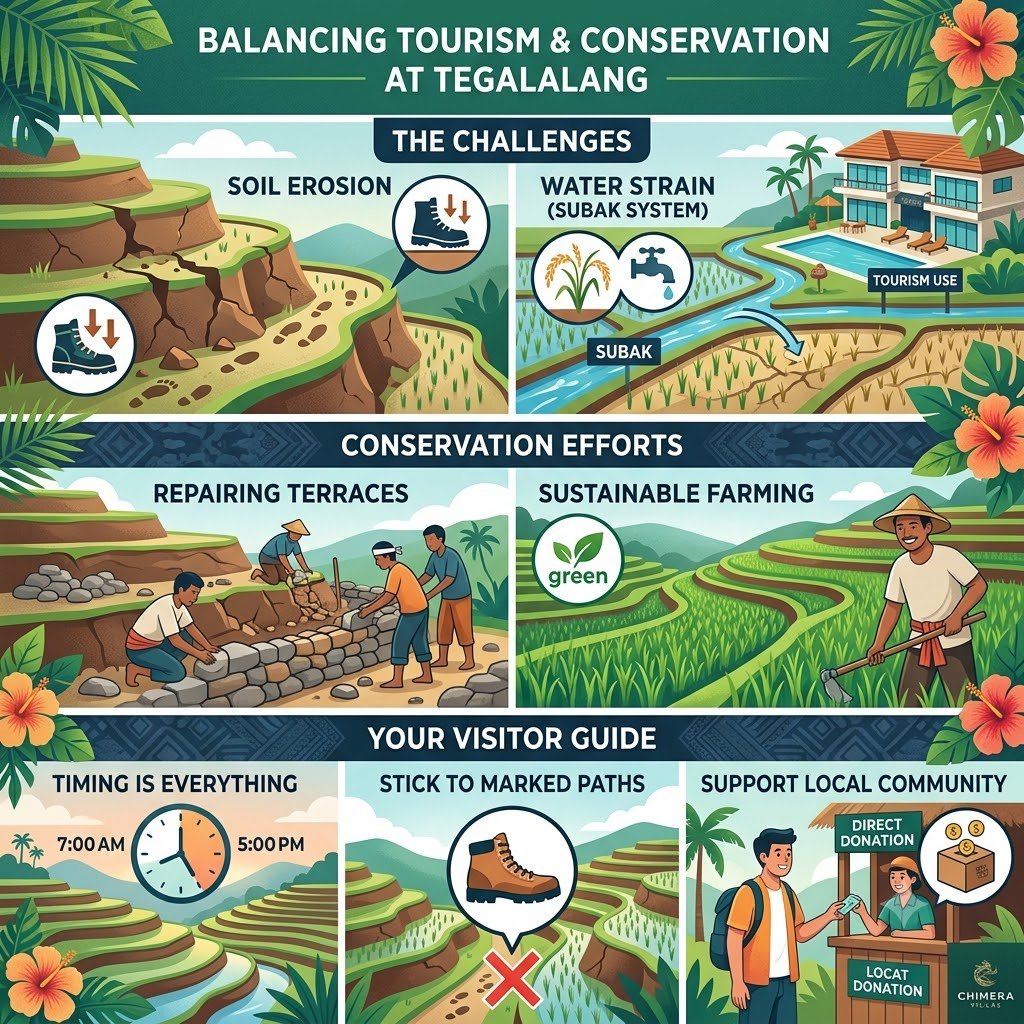
The terraces are genuinely struggling. Heavy foot traffic is accelerating soil erosion on slopes that were never built to carry this many visitors, and the traditional Subak irrigation system, the centuries-old water-sharing network that keeps the rice actually growing, is under real pressure from rising tourism demand for water in the same area.
Short version: Tegalalang is still worth seeing, but the easy, empty version of it that shows up in old travel blogs doesn’t really exist anymore, and knowing that before you go changes how you should plan the visit.
Why a Rice Terrace Gets “Overcrowded” in the First Place
Tegalalang was never designed as a tourist attraction. It’s a working agricultural landscape, and the paths between paddies were built for farmers, not for a daily stream of visitors angling for the same three photo spots. Between roughly 10am and 4pm, when the tour buses from Ubud arrive in waves, the narrow walkways get genuinely congested, and the pressure on the actual terrace walls, the parts holding centuries-old farmland in place, adds up.
The Part That Doesn’t Show Up in Photos
The more serious issue is underneath the view. Subak, Bali’s UNESCO-recognized irrigation system, distributes water fairly across farming communities based on centuries of tradition. As swings, cafes, and viewing platforms have multiplied around Tegalalang to meet visitor demand, water use has climbed with them, leaving farmers competing with tourism infrastructure for the same limited supply. It’s the quiet, unglamorous side of overcrowding that rarely makes it into the postcard.
What’s Being Done About It
Local communities and conservation groups are actively working on it, repairing damaged terrace walls, promoting sustainable farming techniques in the areas hit hardest by tourism, and running education campaigns for visitors on how to walk the site responsibly. None of this is a finished fix, but it’s a genuine, ongoing effort rather than a problem being ignored.
How to Actually Visit Tegalalang Well
The single best move is timing. Arrive at opening or in the last couple of hours before closing, and you’ll get a version of Tegalalang that still looks like the photos, minus the crowd fighting you for the frame. Stick to the marked paths rather than cutting across paddy walls for a better angle, and consider paying the small entry or parking fees the local community asks for, since that money genuinely goes back into maintaining the site rather than disappearing into a middleman’s pocket.
It’s the same logic behind Bali’s broader shift toward visiting well instead of just visiting early: the crowds are real, but a little planning still gets you the Bali everyone comes for. It also helps that Ubud is one of the towns now covered by Bali’s expanded multilingual police presence, so help is never far off even in the busiest tourist stretches.
Quick Answers About Tegalalang’s Overcrowding
Is Tegalalang still worth visiting? Yes, but go early morning or late afternoon to avoid the worst of the midday tour bus crowds.
What’s actually being damaged? Soil erosion on the terrace slopes and pressure on the Subak irrigation system that local rice farmers depend on.
What can visitors do to help? Stay on marked paths, avoid stepping onto terrace walls for photos, and pay any local entry or parking fees rather than trying to avoid them.
The Chimera Villas Take
Tegalalang is a half-day trip from most South Bali villas, and it’s worth building it into a slower morning rather than a rushed stop between two other attractions. Leave early, let your driver time it around the tour bus rush, and you’ll come home with the photo everyone wants, and a lighter footprint on the farmland that made it famous in the first place.